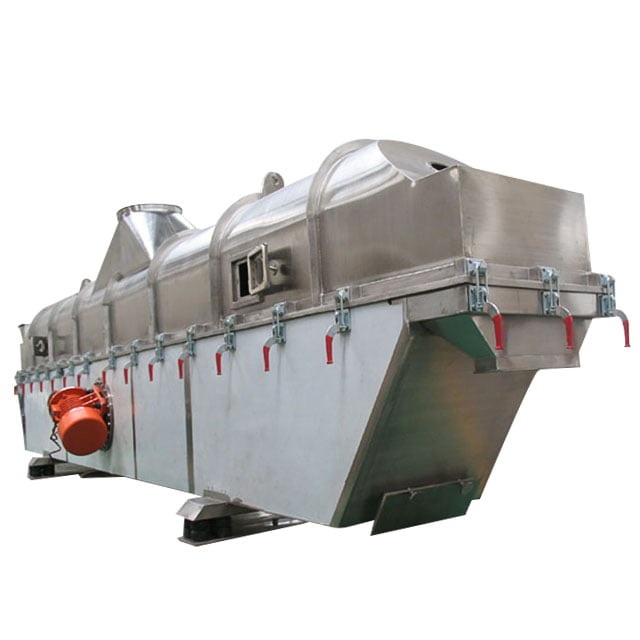
Product Page
Vibrating Fluid Bed Dryer (VFBD) - Product Page

Vibrating Fluid Bed Dryer (VFBD)
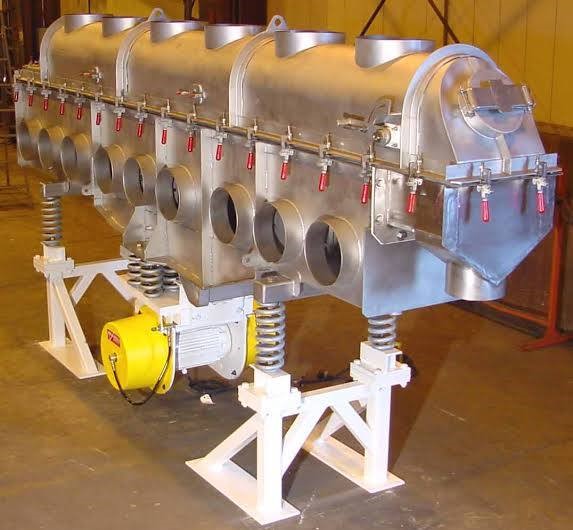
Hybrid Fluidization & Vibration Technology
Vibrating Fluid Bed Dryer

A Vibrating Fluid Bed Dryer (VFBD) is an industrial drying equipment that utilizes a combination of mechanical vibration and hot air to efficiently dry wet materials, particularly granular or powder substances.

The VFBD is designed to handle a wide range of materials, including those that might be sticky, cohesive, or difficult to fluidize using conventional static fluid bed dryer technology.

Ideal for materials with:
  • Wide particle size distribution
  • Low strength wet or dry particles
  • Stickiness or thermoplasticity
  • Pasty properties in wet feed

In the vibrated fluid bed dryer, the materials is easily transported through the dryer by the combined effect of fluidization and vibration. The fluidization velocity can be judiciously selected, to minimize entrainment of the smaller particles, to avoid gas bubbling in the fluid bed thereby minimizing attrition. The residence time can be adjusted, by varying the bed height, through the overflow weir position. A cooling section can also be provided, by partitioning of the plenum chamber.

Capacity: 20 Kg/hr to 2000 Kg/hr feed rate

Key Features and Working Principle

Material Loading: The material to be dried is fed onto the perforated bed of the dryer.
Fluidization: Hot air or gas is introduced from below the perforated plate, lifting and suspending the particles in a fluid-like state. This process is known as fluidization.
Vibration: Simultaneously, the vibratory motors cause the bed to vibrate, enhancing the fluidization process and promoting continuous movement of the material across the dryer. This helps prevent clumping and ensures that each particle is uniformly exposed to the drying air.
Heat Transfer & Moisture Evaporation: As the hot air comes into contact with the fluidized and vibrating material, heat is transferred, and moisture is evaporated from the particles.
Exhaust & Fines Collection: The moist air is then exhausted from the dryer through the exhaust system, which filters out fine particles that might be carried with the air.
Discharge: The dried material is discharged from the outlet, ready for further processing or packaging. 

Advantages of Vibrating Fluid Bed Dryers

Enhanced Fluidization: Vibrations improve fluidization, especially for materials that are sticky or difficult to fluidize with air alone.
Efficient Drying: The combination of fluidization and vibration promotes excellent heat and mass transfer, leading to rapid and uniform drying.
Versatility: Can handle a wide range of materials, including those that are heat-sensitive or prone to agglomeration.
Reduced Agglomeration: The vibrations prevent particles from sticking together, ensuring a more consistent product.
Scalability: Available in various sizes for both small and large-scale production.
Gentle Drying: The fluidization process is gentle, minimizing damage or degradation of delicate materials.
Energy Efficiency:  Efficient heat transfer and moisture removal can lead to lower energy consumption compared to some other drying methods.

Applications

Pharmaceutical:

Drying of granules, powders, and pellets for tablet and capsule production.

Food Processing:

Drying of tea, salts, grains, cereals, snacks, and other food products.

Chemical:

Drying of chemical powders, granules, and fertilizers.

Mineral:

Drying of minerals, ores, sand, and limestone.